Global Citizenship
Our Priorities > Safeguarding the Environment A Comprehensive Water Strategy
Clean water is a critical and finite resource, essential to sustaining human health, economic growth and the environment. Access to water is essential to our manufacturing operations and to all those who use our products. Abbott is committed to managing our water use in an efficient, sustainable manner and to improving people’s access to clean water in the communities where we work and live.
Reducing Our Water Footprint
By 2015, we seek to reduce our company’s total water intake by 50 percent (adjusted for growth). Since 2005, we have lowered our total worldwide water intake by 50.4 percent (adjusted for sales). Abbott is using the World Business Council for Sustainable Development’s (WBCSD) Global Water Tool to help our major manufacturing plants around the world assess their local water needs and develop contingency plans. This tool compares Abbott’s water use with external data, creates performance metrics and geographic mapping, facilitates communications with internal and external stakeholders on water challenges and fosters water conservation and efficiency.
We use the Global Water Tool to help our manufacturing plants assess their water needs. The tool predicts that 18 Abbott sites will be at high risk for water constraints by 2025. Our analysis using the Global Water Tool also projects that by 2025 the locations surrounding 14 of our manufacturing facilities will be classified as “water scarce.” Additionally, eight of our manufacturing sites are located in areas that will be considered “high water stress,” and four of our sites are included on both lists. Thus, we are focusing our water conservation efforts on a total of 18 Abbott sites at greatest risk for water constraints in the next 15 years.
Our water management program is continuously evolving as we gain additional knowledge and insight into resource usage. In 2011, we worked with the Global Environmental Management Institute to develop the Local Water Tool. The Local Water Tool builds on the information in the WBCSD Global Water Tool to examine risks specific to each manufacturing site. We used the tool to help us understand and manage water-related risk at our site in Temecula, California.
Our manufacturing plants continue to implement water reduction projects based on these and previous analyses. In 2011, we designed a gray-water reclamation system at our manufacturing site in Worcester, Massachusetts, to be installed in 2012. At our nutrition manufacturing plants in Casa Grande, Arizona, and Columbus, Ohio, we analyzed our cleaning-in-place systems to ensure efficient water usage during equipment cleaning cycles. Finally, we installed water meters at our manufacturing facility in Karachi, Pakistan, in order to better understand our water consumption and properly manage usage.
Educating Communities on Water Conservation
Along with reducing our own water footprint, we are committed to helping communities with water conservation. Among other programs, Abbott experts frequently engage with community partners and nonprofit organizations to conduct water audit assessments and help develop timelines for water use reduction goals.
In Arizona, for example, Abbott and the Abbott Fund continue to partner with Project WET, the state’s leading water education program, helping to create a culture of water conservation throughout the region. In 2011, more than 4,000 grade school students and dozens of businesses in neighborhoods surrounding our Casa Grande, Arizona, manufacturing plant participated in Project WET training and conservation programs. Since June 2009, this collaboration has helped the community save an estimated 6,024,224 million gallons of water.
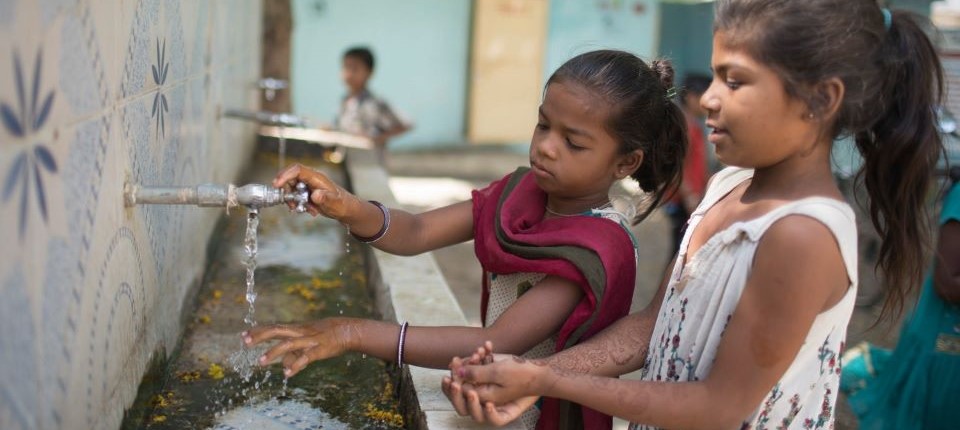
In early 2012, Abbott and the Abbott Fund expanded our partnership with Project WET into Brazil, where we are working with local schools and nonprofit partners to educate children about the importance of clean water, sanitation and hand washing in preventing the spread of infectious diseases. As in the United States, Abbott employees are volunteering their time and expertise to assist Project WET in delivering these local educational efforts.
Going forward, we will continue to collaborate with important stakeholders to identify water conservation opportunities, especially in water-stressed regions where Abbott has manufacturing operations.
Note: All data in the Global Citizenship section reflects activities prior to the separation of Abbott and AbbVie on January 1, 2013.
Quick Links
Our Reports
Key Metrics
For interactive charts demonstrating Abbott’s financial, social and environmental performance Visit this section