Global Citizenship
Profiles Tanzania Mentors
Irish Mentors Provide Training to Peers in Tanzanian Laboratories
Over the past ten years, Abbott and the Abbott Fund have invested more than $95 million in monetary grants and product donations to help strengthen Tanzania’s health care system and address critical medical needs. Our broad public-private partnership with the Government of Tanzania has yielded impressive results, including modernization of the Muhimbili National Hospital in Dar es Salaam, creation of Tanzania’s first emergency medicine department, implementation of a state-of-the-art information technology system, and more than 19,000 health care worker training sessions in HIV care and treatment.
Abbott and the Abbott Fund also have assisted the Tanzanian Government in building a network of 23 regional clinical laboratories – one of the strongest and most modern laboratory networks in Africa. We support the laboratory network not only through donations and in-kind support, but also through knowledge sharing from skilled and experienced Abbott technologists.
In 2011, three volunteers from Abbott’s diagnostics business located in Longford and Sligo, Ireland – Eimear McGlade, William Phiri and Claire Gibbons – traveled to Tanzania for two months to serve as mentors in Abbott Fund’s Laboratory Modernization Program. These three employees represent our first volunteers from Abbott locations outside the United States to complete rotations in Tanzania.
Phiri, who lives in Ireland but was born in Zambia, had benefited from a similar mentorship program when he was first starting out in his career.
“I knew what it meant to work in a lab that was in a deplorable state and then to have outsiders come and provide funding and expertise that enables you to deliver health care at a level you could only aspire to before,” explains Phiri. “When I was given the opportunity to participate in the Tanzanian Laboratory Mentorship Program, I was excited to be on the other side of that equation – in the position of giving support rather than just receiving it. I knew how beneficial the program would be for the Tanzanian laboratories and the communities they serve.”
Strong Motivation to Help
The other two Irish mentors also had strong motivations to participate in the Laboratory Mentorship Program. McGlade already volunteered regularly through Abbott Ireland’s national Croían Óir (Heart of Gold) program, which supports Irish employees’ volunteering and fundraising efforts in their local communities. Similarly, Gibbons says she had always been interested in volunteering in Africa. Their commitment mirrors the broader tradition of community service within Abbott Ireland – where employees volunteered nearly 12,000 hours of service to 200 charitable organizations last year, earning both national and Europe-wide recognition.
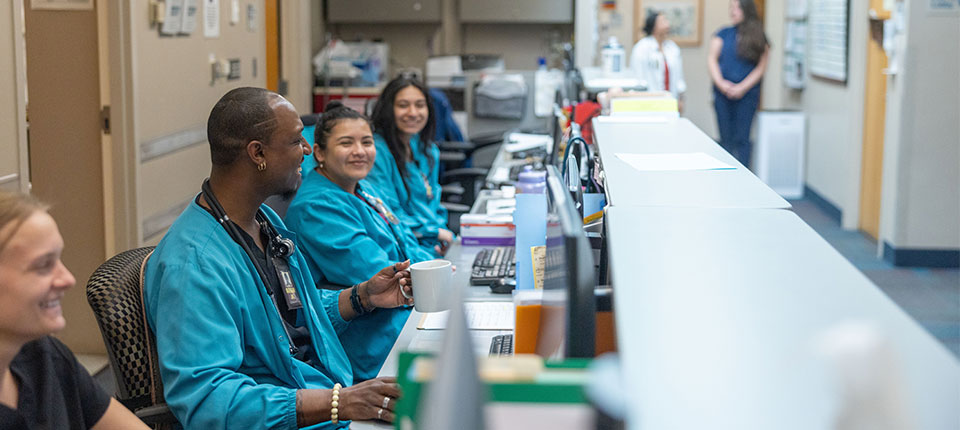
To ensure the mentors would have the greatest possible impact, they received orientation and training sessions both in Ireland and during their first days on the ground in Tanzania. After completing their training, the three Irish mentors spread out, to hospitals in the cities of Moshi, Mbeya and Arusha. Collectively, the three mentors helped their laboratories to implement numerous process improvements, including:
- Verification of laboratory results by a quality control officer
- Direct transmission of laboratory results to the requesting clinician (replacing the prior practice of depending on patients to give results to their physicians)
- Computerization of inventory systems to provide better documentation and more transparency into actual (versus reported) laboratory stock
- Creation of a training program and safety manual to protect laboratory workers from samples with a high prevalence of HIV
- Procurement of retroviral medication and development of treatment protocol for laboratory workers facing accidental exposure to HIV
- Reorganization of reception service to reduce patient wait times
- Development of an information technology databank capable of tracking laboratory workload metrics and providing a baseline for future improvement efforts
- Higher standards for laboratory receipts, forms and logs to capture all data necessary to maintain patient safety and quality of care
- Revisions to scheduling and staffing procedures to reduce absenteeism, improve turnaround times and ensure the 24-hour availability of laboratory services
Lasting Impact
While Gibbons was serving as a mentor in Moshi, she had the opportunity to give a talk on improving patient service and laboratory operations at a conference attended by laboratory professionals from all over Tanzania.
“With that presentation, I feel that I could have an impact on modernizing the Tanzanian health care system that extended far beyond the four walls of Mawenzi Regional Hospital Laboratory,” says Gibbons.
Similarly, McGlade says she was honored to help empower female workers to advance the state of health care in their country.
“I’d like to think that I set a good example for women in the lab,” she says. “Tanzanians often have traditional views. I tried to show them that they can be strong, organized women in a male environment, and to stand by their convictions.”
All three mentors are back in Ireland now, but their involvement with the laboratories in Tanzania continues. Gibbons says she was heartened to receive a recent phone call from the safety officer at the lab where she had volunteered. The officer told Gibbons that she had been training two new lab technicians on the importance of following the safety guidelines that Gibbons had helped implement.
Durable, Sustainable Health Care Improvements
Medical labs play a critical role in diagnosing patients and measuring their progress. While building the national lab network has been a major accomplishment, Abbott and the Abbott Fund recognize that maintaining the network and making it self-sustaining are even more critical challenges.
To help meet the latter goal, the Abbott Fund is working with the Ministry of Health to develop an innovative model in which fees collected from the 20 percent of Tanzania’s citizens with capacity to pay can help to subsidize quality laboratory testing for the 80 percent of patients who cannot afford health care services. Our hope is that in the long term, this payment structure will help the lab network become self-sufficient.
Note: All data in the Global Citizenship section reflects activities prior to the separation of Abbott and AbbVie on January 1, 2013.
Quick Links
Our Reports
Key Metrics
For interactive charts demonstrating Abbott’s financial, social and environmental performance Visit this section